I thought I had already written my way through most of the hard material. I had been telling myself a familiar story: that I was brave, that I had already gone there, that I knew how to face the wound and name it. A speculative nonfiction writing class with Emilly Prado quietly dismantled that belief.
Emilly offered prompts that blurred genre and time, that refused the tyranny of linear sense-making. Write about a dream. Write a what-if imagined reality. Write without explaining yourself to an imagined reader who wants neatness, moral clarity, or catharsis on cue. Write toward what resists being written. Write toward the place you keep skirting, the place that still makes your body tense. I remember thinking: Oh. You mean there is still something here.
Around the same time, I devoted myself to Emilly’s memoir, Funeral for Flaca. I didn’t read it as a book so much as I experienced it as a rupture. The prose is raw without being careless, precise without being bloodless. It reads like a refusal — of silence, of respectability, of the idea that feminism must be palatable to be legitimate.
Or, to put it another way, it felt like a feminist manifesto written from the body outward, from grief and memory and lineage, rather than theory. It made me want to be braver on the page. It made me want to stop protecting the people who had not protected me. It made me want to tell the truth in a way that didn’t tidy itself up afterward.
That is how I wrote, for the first time, about my estranged brother.
Sometimes I have recurring dreams where you show up at some family event, sometimes alone or sometimes with your wife and kids, and you act like no time has passed at all. It’s like you never left. In one of the dreams, the most vivid, there was a big party where many people were gathered, more than just our family. It was not long after my motorcycle accident, and I wanted you to see my scars, to feel alarm and concern in response, to ask me what happened, if I was OK.
In the dream, I joined a circle of people you were speaking to. I inserted myself into the conversation, chiming in with my experience or thoughts or maybe my opinion, and flamboyantly waved around my reattached hand while speaking, flashing the worst scar where a deep seam cuts violently across my forearm and the back of my wrist bulges, a humpback of the wrist, from the bone callouses that grew over the artificial bone graft used to attach the hand to the new metal arm bones. You noticed, but you didn’t ask. You didn’t seem to care.
Writing this in class, I could feel my body react before my mind did. My shoulders crept upward. My jaw clenched. There was a familiar humiliation in the scene: look at what happened to me, look at what it cost, look at how I survived — and still, nothing. The dream was not subtle. It did not need interpretation. It was doing what dreams do best: staging the emotional truth without apology.
During the dream I realized I was dreaming, and that changed everything. No need to behave. No need to save face. I made a beeline to you, took your face in my hands, and earnestly asked, “What do I have to do, what words do I have to say to get through to you and make you come to your senses and come back?”
You looked sad and replied, “There’s nothing you can say or do. I’m gone. Just let me go.”
This is where the speculative turn matters. This is where the prompt becomes a portal. Because what the dream offered — what the class allowed — was not reconciliation, but clarity. The answer was devastating precisely because it was clean. No argument. No misunderstanding. No secret combination of words I had failed to discover. Just absence, chosen and maintained.
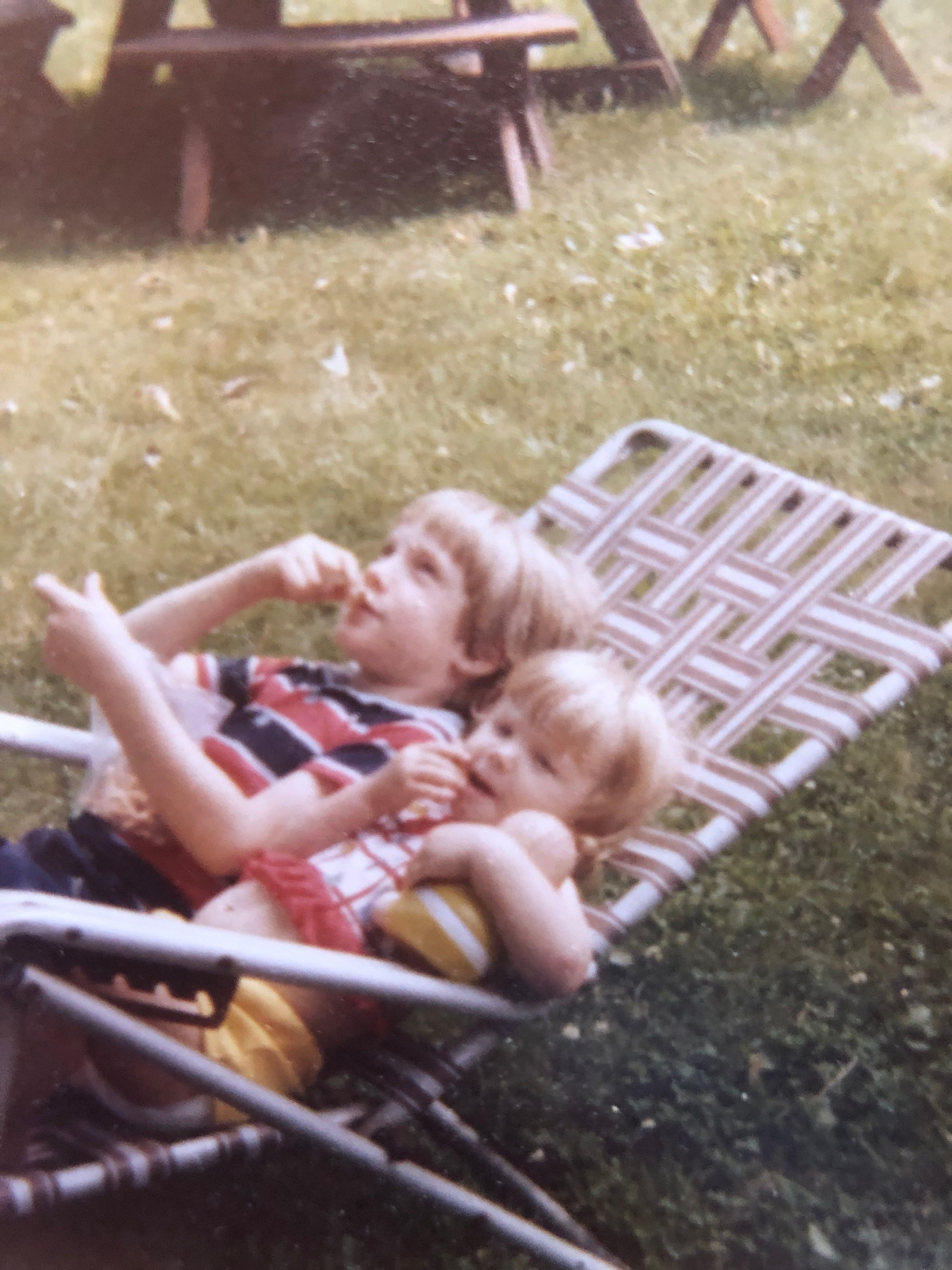
Then I heard a commotion behind me and looked back. Everyone was gone. The room was empty. When I looked back at you, you were a child. About the same age as my son, the nephew you’ve never met. You reached for me; I held you in my arms. Then I woke up.
In Funeral for Flaca, Emilly writes grief without sentimentalizing it. She does not rush toward forgiveness as a moral endpoint. She allows love and rage to coexist without forcing them to resolve. That mattered to me as I sat with this dream on the page. Because I do not forgive you. And I am tired of pretending that forgiveness is the only proof of emotional maturity available to me.
Although I don’t forgive you, although part of me wants to shout at you and scream things like fuck you and I hate you, although the only real question I have from the wounded place inside my inner twelve-year-old is how could you? — I know that if I ever spoke to you again, I would not actually behave that way.
There was a subsequent prompt: the what-if imagined reality.
What if I picked up the phone. What if your voice answered on the other end of the line, a voice I still know by heart. What if I didn’t perform anger or righteousness or moral superiority. What if I asked you if you’re happy?
What if I asked what your typical day looks like. What time do you wake. What do you eat for breakfast. What are the first thoughts crowding into your mind at dawn, each beginning disguised as ordinary?
This is not weakness but curiosity as resistance. This is refusing the flattening narrative that estrangement demands, where someone must be fully villain or fully absolved. Feminism, at least the kind that has saved me, makes room for complexity. It insists that care and accountability are not opposites. It insists that my longing does not invalidate my boundaries.
I imagine asking about my niece and nephew, yes, but mostly I imagine wanting to know about you — how you inhabit your life, your days, your nights, the quiet spaces where ideology loosens its grip and a person is left alone with themselves.
What would you ask about me? Would I tell you about your nephew, the beautiful and magnificent child I grew in my queer womb? Or would I tell you about the memories he has with my other siblings, the ones who stayed.
The siblings who placed unconditional love at the center, who made disowning impossible even when it would have been easier. They love me. They love my son. They have lived memories with him — shared holidays, inside jokes, small rituals — that return joy to our bodies when we recount them. Perhaps I would tell you about those memories not to punish you, but to mark the cost of your absence. To say: this is what you relinquished.
Perhaps you would hang up. Perhaps you would express remorse. Perhaps nothing would change. But I would feel unburdened to have spoken without contorting myself into something smaller.
This is what speculative nonfiction gave me: not closure, but space. A way to write toward truth without demanding it behave. A way to hold the child version of you in my arms without inviting the adult version back into my life. A way to honor my grief without betraying myself.
Reading Funeral for Flaca alongside writing these pieces felt like being given a map, then being told I could redraw it. Emilly’s work models what it looks like to be ferociously honest and tender at the same time. To write from a feminist place that understands the body as archive, the family as both wound and teacher, and storytelling as an act of survival.
In that class, I didn’t learn how to fix anything. I learned how to stop lying to myself about what still hurts. I learned that queering reality sometimes means refusing the script altogether — refusing reconciliation narratives, refusing forgiveness-as-demand, refusing the idea that the most loving thing to do is always to let someone back in.
Sometimes the most loving thing is to write the dream down. To imagine the impossible conversation. To hold the child. To wake up.