

Something Cracks Open a Hidden Door
Being young and queer in a culture that withholds its lineage from you . . .

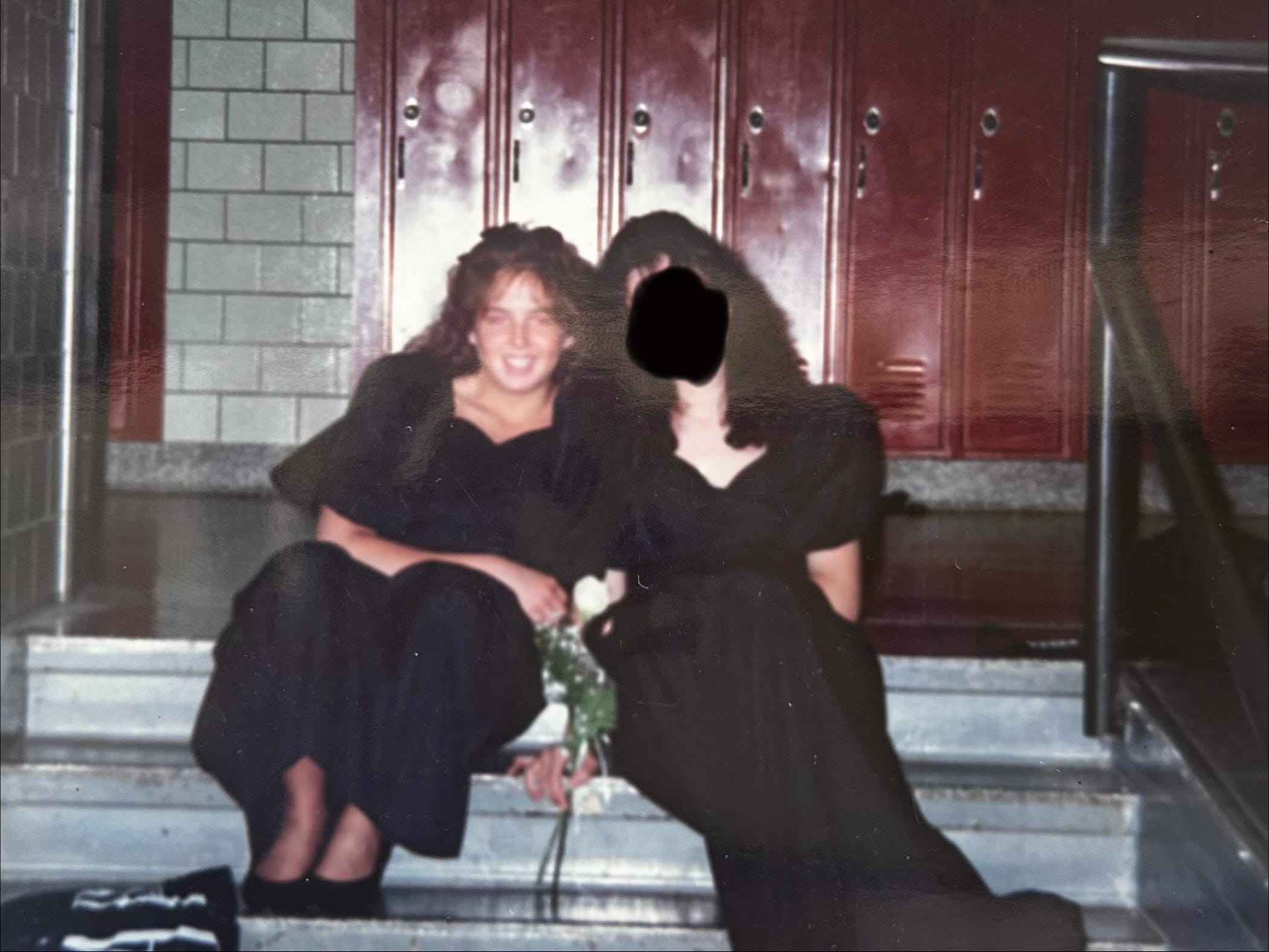
We wrote prolific letters. I’m not sure why, but our secret nicknames for each other were Porky and Choppy. I was the latter. Her letters began, Dearest Choppy, and they all ended with some variation of yours forever, Porky. The intensity of such a promise at that fresh of an age (we were teenagers) was not lost on me. I remember loving her writing, her handwriting, the smell of the paper (she added a spritz of her perfume to it), and most of all, loved watching the letters accumulate. They were proof. Evidence that something was happening, that it was happening to me, that it could be returned to and touched again.
For a long while after, I attempted to turn lovers into letter writers like her, wanting desperately to regain that particular magic. I would buy my partners stationery and fancy pens. I would start by writing the first letter and imploring her to reply. It never worked. Blithe indifference was typical, but once, a girlfriend was bitterly angry and felt unfairly pressured to perform this service for me. That was the incident that stopped me, made me accept it was a magic I shared only with my first love.
What I was trying to reproduce wasn’t epistolary romance so much as ontological permission. Those letters had said: this exists. They had made space for a version of myself that felt otherwise unrecognizable in the dominant world. The ache that followed me from relationship to relationship was not about paper and ink, but the feeling of being mirrored into reality. What I regret to this day — and it may be my only true life’s regret — is that I took the rather large box of letters I carried around in my closets as a young adult and gave it back to her in a big retaliatory gesture, a symbolic middle finger of sorts, when she married the young man I knew she didn’t really love.
At the time, I told myself it was an act of dignity. I told myself I was releasing us both from the weight of the past. I told myself I didn’t want to be the kind of person who hoarded relics from a lover who had chosen heterosexual legitimacy over me. But this was a lie or at least an incomplete truth. What I was really doing was destroying evidence. I was erasing the paper trail of a reality that had once existed and then been declared — by the world and eventually by her as well — to be inadmissible.
When I read the novel Beings by Ilana Masad, my regret came roaring back with unexpected force. One of the three main narrative threads in the novel is an archive of letters written by a lesbian science fiction writer from the 1960s named Phyllis. She is writing to her first love, Rosa, who also married a man she didn’t really love. Phyllis signs those letters with that same intense yet iconic promise: yours forever.
But Beings is not simply a novel about queer letters or lost loves. It is also a novel about UFOs, with abduction narratives, people who claim to have been taken — bodily, psychically, temporally — by beings that do not belong to this world. The book refuses to resolve whether these encounters are literal or metaphorical, pathological or revelatory. Instead, it asks a different question: what does it mean to feel that your experience cannot be accounted for by the dominant story of reality?
The figure of the alien in Beings operates as a parallel language for queer estrangement. To be abducted is to be removed from the normative flow of time. To be returned is not to be restored. You come back changed, marked, carrying knowledge that no one else recognizes as legitimate. Your testimony is doubted. Your body becomes suspect. Your memory is treated as fantasy.
Reading this, I felt a familiar click of recognition. Queerness, especially before it has social validation, often feels less like identity and more like visitation. Something arrives in you uninvited, undeniable, and disruptive to the life you were supposed to have. You don’t choose it. You survive it. You try to explain it to others and watch their faces close, polite and unconvinced.
This brought feelings of such bittersweet nostalgia that I had to put the book down. My body responded before my intellect could catch up: a tightening in the chest, a heat behind the eyes, the unmistakable ache of recognition. It was not just the letters themselves that moved me, but the fact of their survival. Someone had kept them. Someone had decided they mattered enough to be preserved, even when the world they described had refused to make space for them.
Queer reality, so often, is constituted by what almost didn’t happen and what did happen but wasn’t allowed to count. We live amid ghost narratives — relationships that were formative but unofficial, love affairs that shaped us but were later minimized, denied, or rewritten as phases. Like UFO abductees, we are often told that our experiences were misinterpretations, hormones, imagination, trauma. The archive becomes a site of resistance not because it is nostalgic, but because it insists on the factuality of queer feeling. We were here. This happened. It mattered.
Now I remember the reason for our nicknames, Porky and Choppy. It was because we watched the movie Groundhog Day together and there was a line in it where Phil Connors (Bill Murray) yells, “Don’t mess with me, pork chop!” at a bewildered man in a hallway after realizing it’s February 2nd again. He slams the man against the wall, shouting the insult before demanding to know the date. We laughed so hard at this and reenacted it so many times, each of us throwing the other against the wall playfully in a similar way but with erotic energy behind it. Out of that game fell our secret pet names for each other.
What strikes me is not just the tenderness of this memory, but its structure. Time looping. Repetition with difference. Desire emerging through play and violence softened into consent. Groundhog Day is itself a story about being trapped in time, about learning through repetition how to live differently inside a rigid structure. We were two girls playing at rupture inside a world that insisted on inevitability.
This is how queerness often announces itself: sideways, disguised, laughing too hard at something that cracks open a hidden door. We didn’t know yet that what we were doing had a history. That other women had pressed women against other walls and then written about it in letters signed yours forever. We thought we were inventing something entirely new, which is both the great pleasure and the great vulnerability of being young and queer in a culture that withholds its lineage from you.
In Beings, this lineage is guarded not by an omniscient narrator but by an Archivist — a figure who gathers fragments, testimonies, letters, transcripts, and arranges them without pretending to master them. The Archivist does not claim objectivity. They do not resolve contradictions. Instead, they offer a counter to traditional historical authority, which so often demands coherence, proof, and linear causality.
Queer history, like UFO history, does not behave linearly. It loops, disappears, resurfaces. It is full of gaps, redactions, and disputed claims. The Archivist’s power lies not in adjudicating truth, but in refusing erasure. In saying: this was said. This was felt. This was recorded.
In the end, just like the fictional Rosa believed it wrong and bad to be romantically intimate with Phyllis thirty years before we were, my first love believed this too and stopped seeing me, stopped speaking to me. My heart was more broken by the loss of her than it has been by any other romantic loss since. My heart bears this scar still.
There is a particular devastation that comes from being someone’s first love when they do not — or cannot — be yours in public. You are asked to hold the intensity without the recognition, the forever without the future. You become a formative secret, which is a beautiful thing until it becomes unbearable. When she married him, it felt less like rejection than annulment, as though the world had retroactively declared our love null and void.
And those letters — oh, how I wish I would have kept them or committed them to a queer archive somewhere. I imagine them now, yellowing slightly, still fragrant with the faintest trace of her perfume. I imagine a future researcher opening the box and feeling that familiar thrill: here is proof. Not of tragedy, but of devotion. Of a teenage girl writing yours forever and meaning it with her whole body. Of another girl — me — learning, line by line, how desire could be articulated, how language could carry longing across time and space.
Perhaps this is what it means to queer reality: to insist that these moments were not rehearsals for something else, not detours on the way to adulthood, but the thing itself. The letters were not juvenile. They were not excessive. They were accurate. They told the truth as we knew it then, which is the only truth anyone ever has access to.
I can’t get them back. But I can write this. I can add my testimony to this living archive, fragile but persistent, of queer love that was real even when it was unsanctioned, even when it was abandoned, even when it was returned in a box out of spite and grief.
I write for Phyllis and Rosa, for Porky and Choppy, for every abducted feeling that could not be explained away, for every promise made forever and broken not by lack of love but by the gravity of the dominant world. I understand now that yours forever is not a contract. It is a declaration of intensity.
It means: time will not undo this.
It means: what we had marked me.
It means: I am still here, remembering.
This is both devastating and beautiful, and articulated so well. I’ll be chewing on these thoughts for a while. Thank you for sharing!
This is so beautiful in every single way. My heart is full!